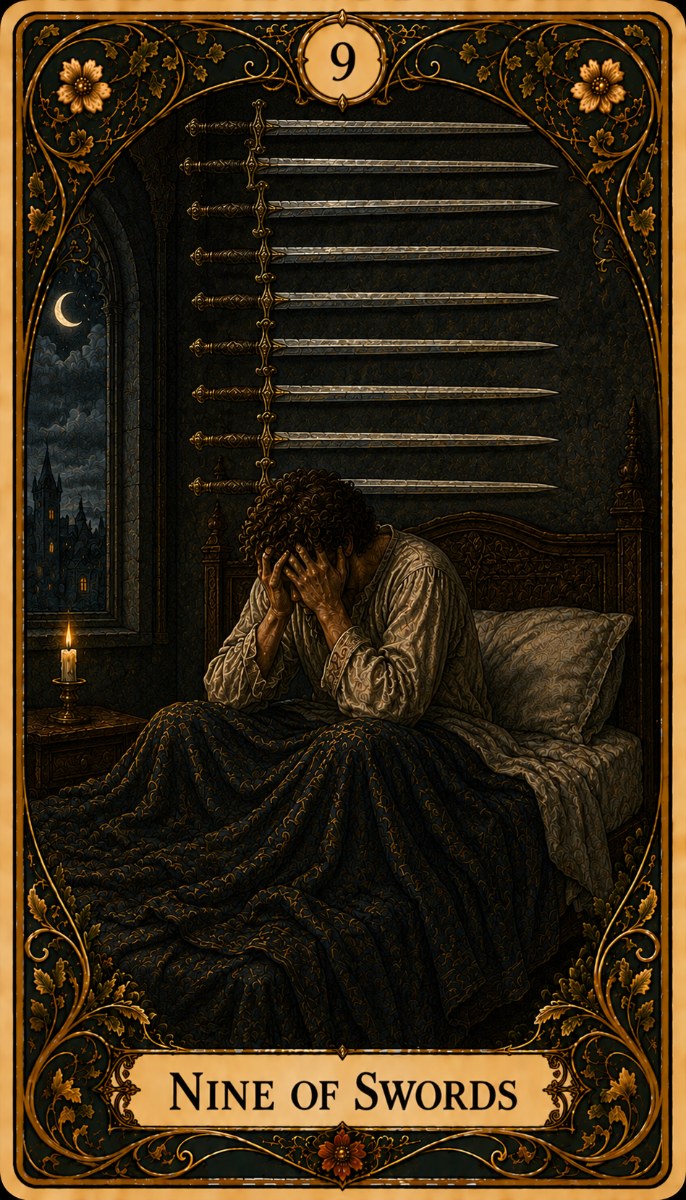
Nine of Swords yes or no is a no — but before that no confirms your worst fear, look at what the card actually shows: a figure sitting up in bed, head in hands, while nine swords hang on the wall behind her — none of them touching her. This is the deck's anxiety card, and its no is aimed at a specific target: not the thing you're afraid of, but the state you're asking from. It says nothing reads true and nothing resolves well from inside this level of dread — which is a different answer from "the dreaded thing is happening," and the difference matters enormously for love, reconciliation, and career questions, as the sections below sort out. yes or no tarot card meanings
Does Nine of Swords Mean Yes or No?
For a general question, the Nine of Swords is a no — with the most important scope-note in this entire batch of articles. This card doesn't primarily answer questions about the world; it answers questions about the asker, and what it reports is anguish: worry that has grown past its cause, dread doing laps at night, a mind rehearsing catastrophes on a loop. Its no means: not from here. Whatever you asked — will it work out, is it over, am I going to lose everything — the card's honest reply is that the question has been taken hostage by fear, and any answer produced under those conditions measures the fear, not the facts.
The reasoning is built into the image, detail by detail. Nines in tarot are cards of culmination — a suit's energy near its peak — and Swords rule the mind, so the Nine of Swords is mental suffering at full volume: the 3am hour when every worry attends the same meeting. But the scene tells on itself. The swords hang flat on the wall, decorative, out of reach of the figure they're supposedly menacing. It's dark — the hour when perspective is physiologically at its worst. She's in bed: the crisis is happening in the theater of the mind, not in the room. Tradition reads this card accordingly, and it's one of the deck's most consistent teachings: the Nine of Swords marks fear that outruns its object. The anguish is completely real. The catastrophe, far more often than not, is not.
On the yes-no-maybe spectrum, this sits at no — but it's a no about conditions, not destiny, and it's worth placing the card between its neighbors to see the shape of it. The Eight of Swords is a trap that's mostly perceived; the Ten of Swords is an ending that has actually happened; the Nine, between them, is the fear of the ending — the night before a morning that usually arrives less terrible than imagined. The card's practical answer to almost any question asked through it: put the question down until daylight, verify one fact against one fear, and ask again from a rested mind. And said once, plainly: if the 3am dread is every night rather than this night, the most useful next step isn't another card — it's telling someone, a person you trust or a professional, because carrying this card's picture alone is exactly what makes it heavier.
Knight of Swords Yes or No: Fast Yes, Check the Speed, Page of Swords Yes or No: Watching, Not Moving Yet and Ten of Swords Yes or No: A Final, Finished No
Eight of Swords Yes or No: The Trap Isn't Locked, Seven of Swords Yes or No: No — Something's Hidden, Five of Swords Yes or No: A Win You'd Regret and Nine of Swords as How Someone Sees You: Weighed Down
Nine of Swords Reversed — Yes or No?
Reversed, the Nine of Swords softens toward relief — the nightmare is breaking. This reversal classically marks the turn out of the spiral: dawn after the worst night, the fear finally said out loud to another human being, help reached for, or the dreaded thing confronted directly and discovered to be a fraction of the size of its shadow. If you asked "will this anguish end," reversed answers yes, and it's already ending — the worst night is behind you, perspective is returning, and the gap between what you feared and what's actually true is becoming visible.
Be precise about what reversed does and doesn't promise. It's a yes to the suffering lifting, not automatically a yes to the outcome you originally asked about — the situation underneath still gets its own answer once you can see it clearly, and that's exactly the point: reversed restores the conditions under which a real answer becomes possible. The one shadow reading worth naming: occasionally this reversal marks the spiral deepening rather than releasing — anxiety tipping into exhaustion, the point where handling it alone stops working. The tell is trajectory: if speaking the fear brought even slight relief recently, you're in the recovering read; if the nights are getting worse, treat the card as the deck underlining what you already know — bring someone else in.
Nine of Swords Yes or No for Love and Relationships
For love, the Nine of Swords leans no — as a reading of the state the love is in, not a verdict on the love itself. This card drawn on a relationship question describes a connection being consumed by anxiety: the spiral of decoding messages and rehearsing losses, the certainty at midnight that it's all collapsing followed by the morning evidence that it isn't, the exhausting vigilance that mistakes itself for care. Sometimes the fear has a real seed — an actual distance, a genuine problem — but the card's testimony is that the worry has outgrown whatever planted it and is now doing damage of its own: a partner can feel themselves being catastrophized about, and nothing starves a connection quite like being related to as a pending disaster. If you asked "is this relationship okay," the card's honest answer is: it can't be assessed through this much static — and the static, not the relationship, is what needs addressing first.
Nine of Swords Yes or No: Reconciliation / Getting Back Together
For reconciliation, the Nine of Swords is a no-for-now — and it's the card most likely to be drawn at the exact hour it depicts, on the exact question causing the sleeplessness, which is worth saying out loud: if you pulled this card late at night asking "have I lost him forever," the card is very probably describing you, right now, mid-draw. Its answer isn't a report on him — his feelings, his movements, his return — it's a mirror of the anguish doing the asking. And its no means: this question cannot be answered from inside this night. Grief-adjacent panic reads every silence as forever and every memory as evidence; the card refuses to co-sign conclusions reached in that state.
What it offers instead is unglamorous and real: the "forever" your 3am mind has ruled on is not a fact — it's a fear wearing a fact's clothing, and the two feel identical only in the dark. The card's instruction is sequence: sleep before conclusions, daylight before decisions, one honest conversation with a friend before any message to him. Notably, this card also cautions against the 3am text itself — the anguished reach-out composed at the bottom of the spiral — not because contact is forbidden, but because messages sent from the Nine of Swords carry the Nine of Swords, and what they communicate is panic rather than love. Whatever the true answer about the reunion is, it will still be there in the morning, and you'll be able to read it then.
Have this exact question? Will he come back?
Nine of Swords Yes or No: Marriage or Commitment
For marriage, the Nine of Swords is a no — vetoing not the person but the engine behind the question. Drawn on "will he propose" or "should we commit," the card asks what's actually driving the asking, and its presence suggests the answer is dread: fear of it never happening, fear of time running out, fear of being the last one unchosen, the anxious arithmetic of timelines and ticking clocks. Commitment pursued as an escape from that dread doesn't cure it — married anxiety is still anxiety, with higher stakes — and the card's no is specifically to deciding anything this consequential from the bottom of the fear.
The constructive read: this card on a commitment question is often the deck pointing at the real issue — not "will he," but "why does the not-knowing hurt this much" — and that question, honestly explored, does more for the eventual marriage than any timeline pressure could. Settle the nervous system first; the commitment question will still be there, and it will look different from calm ground. If part of what's feeding the spiral is genuine uncertainty about where the relationship stands, that deserves a fuller look than one card taken at midnight — a full love tarot reading, done rested, can map what the fear keeps distorting.
Nine of Swords Yes or No for Career or Big Decisions
For career questions, the Nine of Swords is a no-for-now that names one of the most common versions of this card's territory: work dread. Asked "will I get fired," "did I ruin everything with that mistake," "is the review going to be a disaster," the card first identifies the state — the Sunday-night stomach drop, the email reread eleven times, the catastrophe rehearsed in the shower — and then applies its standard finding: the feared professional apocalypse is almost always larger at 3am than in the meeting. Careers very rarely end the way insomnia scripts them; they end slowly and visibly, and the visible evidence is exactly what the card tells you to consult instead of the dread. If you asked "is the catastrophe coming," the honest lean is: probably not at the size you're carrying it.
The instruction for decisions is one bright rule: nothing signed, sent, or quit from the bottom of the spiral. Fear-driven career moves — the panic resignation, the preemptive over-apology, the 2am email — convert imagined catastrophes into real ones. Verify one fact (ask the manager, check the actual numbers, read the policy), sleep once, then decide. The card's no expires at exactly the rate the facts replace the fear.
Signs to Trust This Answer
- You drew the card at night, or mid-spiral — the hour and state of the draw matter more for this card than any other in the deck; a Nine of Swords pulled at 2am on the question keeping you awake is describing the puller, and that self-portrait reading should be your default.
- The fear has grown while the facts haven't — if you can't name anything that actually changed in the situation this week, but the dread about it has doubled, that widening gap between event and anguish is precisely what the card measures.
- Daylight keeps disagreeing with midnight — notice whether the catastrophe that feels certain at 3am reliably shrinks by 10am; that daily cycle is the card's mechanism running in real time, and it tells you which version to trust.
- If you pulled more than one card, let the neighbors size the real problem: a grounded card beside it (Four of Swords, The Star) confirms the situation is smaller than the fear and rest is the cure, while a genuine trouble card (Ten of Swords, The Tower) says a real event is coming and the work is preparing for it calmly rather than dreading it sleeplessly.
- Saying it out loud shrank it — the fastest field test this card has: speak the specific fear to one trusted person, and if it audibly deflates in the telling, it was Nine of Swords material; if it holds its size in daylight and company, take it seriously by daylight means.
Nine of Swords Yes or No — Card Combinations
If you drew more than one card, the card beside the Nine of Swords changes the strength or direction of the answer. Here are the most common combinations and what they indicate:
| Combination | What It Means for Your Yes or No Answer |
|---|---|
| Nine of Swords + The Moon | Confirms and deepens the no — the anxiety is being fed by genuine murk. Something in the situation really is unclear or undisclosed, and the spiral won't fully release until the missing information surfaces; address the fog, not just the fear of it. |
| Nine of Swords + The Star | Softens the answer decisively toward hope. The worst night is ending and genuine healing follows — this pairing is the deck's classic "darkest before dawn" sequence, and it says the recovery is already in motion even if the relief hasn't registered yet. |
| Nine of Swords + The Sun | Flips the answer — the feared outcome does not materialize. Daylight arrives on the situation and shows it plainly smaller and kinder than the 3am version; of all this card's pairings, this is the strongest "the fear was the whole problem" reading. |
| Nine of Swords + Four of Swords | Yes to relief, but rest comes first — a timing condition with a prescription in it. Nothing about the situation can be read or resolved until genuine recovery happens; the answer you're seeking becomes available on the other side of actual sleep and stepped-back weeks, not before. |
| Nine of Swords + Ten of Swords | The hard double-confirmation, handled honestly: the feared ending is real — this pairing says the anguish has an object, and the chapter genuinely closes. Its mercy is specificity: what ends is the situation, not you, and the Ten's dawn on the horizon means the dread phase ends with it. |
This Does NOT Mean
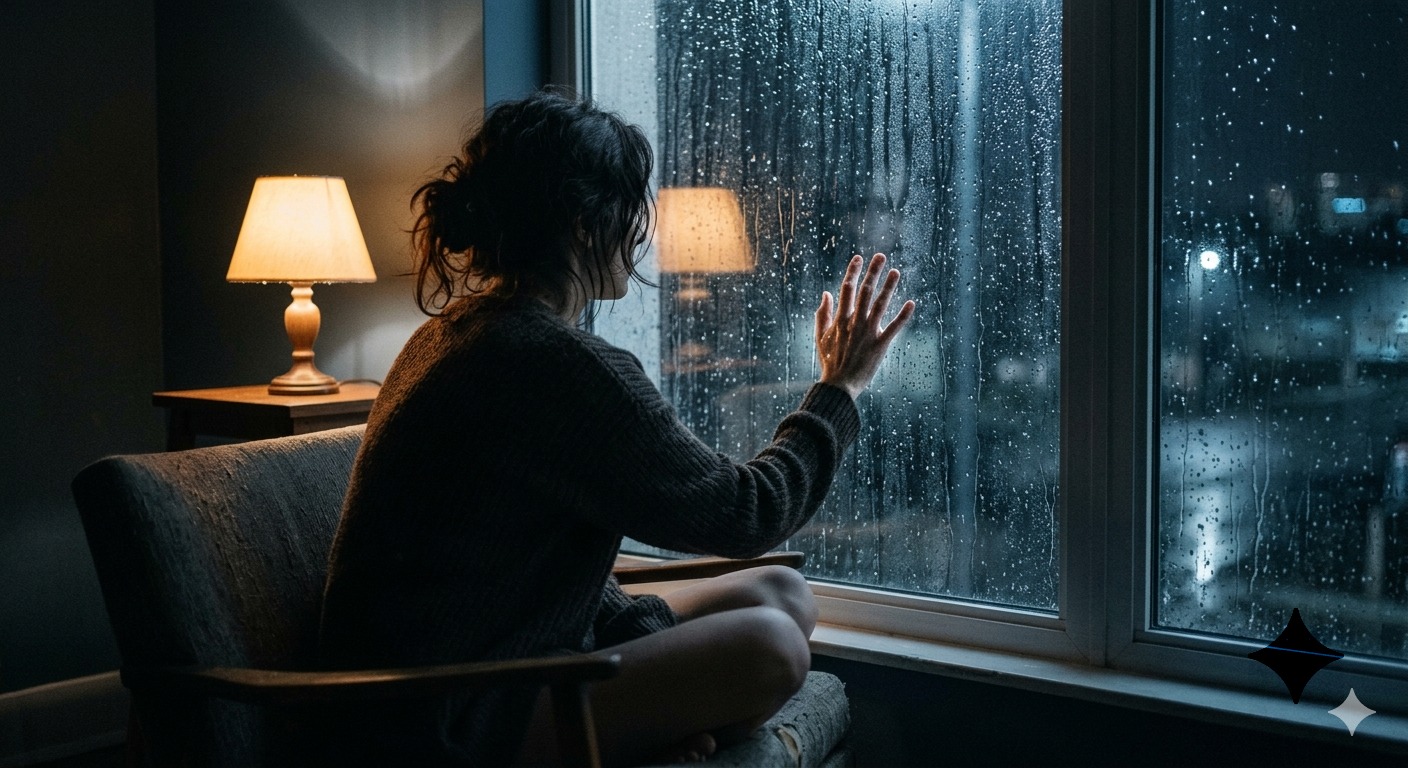
The specific over-interpretation readers make with the Nine of Swords is the most predictable and the most costly in the deck: reading the anxiety card as confirmation of the anxiety. She asks "is it all falling apart," draws a picture of a woman in anguish, and concludes the deck has seen her future — when the deck has seen her present, sitting up at 2am, asking. The error is almost mechanical: a catastrophizing mind treats everything as evidence for the catastrophe, including a card whose entire message is "your mind is doing that thing." The card becomes the tenth sword. What gets missed is the image's deliberate construction — the swords mounted harmlessly on the wall, the crisis staged entirely in a bedroom, the monster given no body — every detail placed to say: this is what fear looks like from outside, and from outside, notice what it isn't touching.
The opposite error needs one honest sentence too: "it's just anxiety" used as a dismissal — of the suffering, or of the situation. The suffering is never "just" anything; nights like the one this card paints are genuinely brutal, and if they're frequent, they deserve real support, not a pep talk from a tarot article. And occasionally the fear does have a real object — that's what surrounding cards are for. The correction holds the full picture: treat the anguish as real and worth tending, treat the catastrophe as unverified until daylight and facts have had their vote, and keep the two firmly separated — because the single most damaging move available is deciding your actual life at the hour when the swords on the wall look like they're falling.
FAQ
What does Nine of Swords mean as a yes or no card?
The Nine of Swords means no — with a crucial scope: it answers about your state, not your fate. The card reports anguish and dread running past their cause, and its no means nothing reads true from inside that spiral. The swords in the image hang on the wall without touching the figure — the card depicts the nightmare, not the event, and the feared thing is usually smaller than its 3am version.
Nine of Swords reversed yes or no?
Reversed, the answer softens toward relief — the nightmare is breaking. Dawn after the worst night, the fear finally spoken aloud, help reached for, or the dreaded thing confronted and found smaller than its shadow. It's a yes to the anguish ending rather than to the original outcome, which gets its real answer once you can see clearly. If the nights are worsening rather than easing, take it as the deck underlining: bring someone else in.
Nine of Swords yes or no for love?
Leans no — as a reading of the state, not the bond. The connection is being consumed by anxiety: decoded messages, rehearsed losses, midnight certainties that morning keeps disproving. Sometimes a real seed exists, but the worry has outgrown it and is now doing its own damage. The card's answer to "is the relationship okay" is: it can't be assessed through this much static — quiet the static first.
Nine of Swords yes or no relationship / reconciliation?
No for now — because this card is usually a mirror of the asker, drawn at the exact hour it depicts, on the exact question causing the sleeplessness. It isn't reporting on the ex; it's reporting the panic doing the asking, and it refuses conclusions reached at 3am — including the certainty that it's "forever" over. Sleep before conclusions, daylight before decisions, and no messages sent from the bottom of the spiral.
Does the Nine of Swords mean my worst fear is coming true?
Almost always no — this card marks fear outrunning its object, not prophecy. Its consistent teaching is that the catastrophe rehearsed at night arrives, if at all, far smaller by day. The honest exceptions: paired with a genuine event card like the Ten of Swords or The Tower, a real difficulty may be coming — and even then the card's counsel is preparation, not dread. And if the 3am fear is every night rather than this night, the answer you need isn't in the deck — it's in telling someone you trust.
Related Readings
Draw your own card with the Yes or No Tarot tool, or if you're still working out what you're really asking, start wider with a Free Tarot Reading.