The Four of Swords gets read as a polite suggestion: you seem tired, maybe take a break. That undersells it badly. The card comes directly after the Three of Swords, the heartbreak card, and it shows what has to happen next for any of that pain to heal. Rest here is not a reward for finishing; it is a requirement for continuing. The reason people resist this card is honest and specific: when you finally stop, everything you have been outrunning catches up with you. The Four of Swords asks you to stop anyway, because recovery does not happen while you are still in the fight.
Last updated: October 2026
Key Takeaways
- Upright, the Four of Swords signals rest, recovery, retreat, and a deliberate pause after stress, conflict, or heartbreak.
- Reversed, it splits two ways: refusing to rest, with burnout, restlessness, and pushing through exhaustion, or resting too long, with withdrawal and stagnation disguised as recovery.
- Rest is the work here. The swords are set aside, not abandoned, and they will be picked up again when you are ready.
Four of Swords At a Glance
| Attribute | Detail |
|---|---|
| Number | 4 |
| Arcana | Minor Arcana |
| Element | Air |
| Ruling Planet | Jupiter (Jupiter in Libra, in the Golden Dawn system) |
| Zodiac Link | Libra, specifically its third decan (roughly October 13 to October 22). The Golden Dawn calls this card the Lord of Rest from Strife, and Jupiter's restorative, benevolent influence in Libra, the sign of balance, fits the card's theme of regaining equilibrium. |
| Numerology | 4: stability, structure, consolidation, and the pause that secures a foundation |
| Upright Keywords | Rest, recovery, retreat, contemplation, recuperation, stillness, healing, a necessary pause |
| Reversed Keywords | Burnout, restlessness, exhaustion, refusing rest, or withdrawal, stagnation, isolation, returning to action |
Four of Swords Numerology
Four is the number of stability and structure, the four walls that make a shelter. In the suit of Cups, the four's stillness tipped toward stagnation. In the suit of Swords, it offers something more welcome: a pause in the mental and emotional conflict that the suit so often describes. After the heartbreak of the Three, the Four creates a protected space where the mind can quiet and the wounds can begin to close. Its stability is not permanent; it is the stillness that makes the next stage possible.
Four of Swords Symbolism
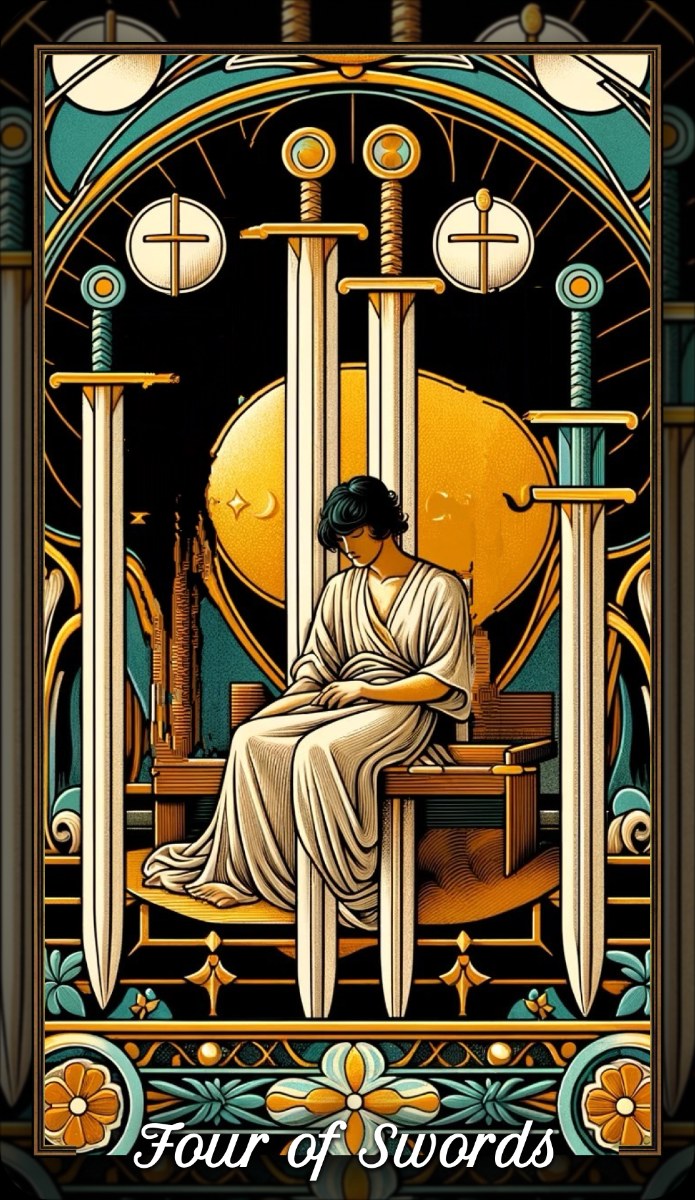
In the Rider-Waite-Smith deck, the scene takes place inside a quiet church or chapel. A knight lies stretched out on top of a stone tomb, hands pressed together in prayer, eyes closed. He is usually read as an effigy, a carved figure, rather than a corpse, and the overall impression is of deep rest rather than death. His stillness is complete, a body that has finally stopped.
Above him, three swords hang on the wall, all pointing downward toward him. They recall the three blades that pierced the heart in the previous card: the painful truths and hurts are still present, still in view, but they are no longer in his hands. A fourth sword lies horizontally along the side of the tomb, close to him, suggesting that one blade stays within reach, ready for when he rises again. In the upper corner, a stained-glass window shows a scene of figures in quiet devotion, often read as an image of blessing, comfort, or healing. The sacred setting reinforces the card's meaning: this is a sanctuary, a place set apart from the world where recovery is allowed to happen. Nothing in the image is hurried.
Four of Swords Upright Meaning
Upright, the Four of Swords calls for rest. It often appears after a period of stress, conflict, overwork, grief, or illness, when your body and mind need time to recover. This may mean literal rest, such as sleep, time off, or a holiday, or it may mean mental and emotional rest: stepping back from a conflict, pausing a decision, or creating quiet so you can think clearly. The card suggests that forcing yourself onward right now will cost more than pausing.
The card is also about contemplation. Stillness creates room to reflect on what has happened, process emotions, and regain perspective before you act again. It can describe a deliberate retreat, such as a meditation practice, a period of solitude, a sabbatical, or time in a peaceful place. Its challenge is that rest can be uncomfortable. When you stop, unprocessed feelings rise to the surface, which is exactly why many people avoid it. The Four of Swords encourages you to let them come. Healing is not something you achieve by staying busy. The swords remain on the wall, but they are not in your hands, and for now that is enough.
Four of Swords Reversed Meaning
The reversed Four of Swords splits into two distinct expressions, describing opposite ways the need for rest can go unmet.
The first is refusing rest. You are pushing through exhaustion, ignoring signs of burnout, or unable to switch off even when you have the chance. Your mind may be racing, your sleep disrupted, your body sending warning signals you keep overriding. This can come from external pressure, such as a demanding job or caregiving responsibilities, or from an internal belief that stopping is weakness or that everything will fall apart without you. The reversed card in this form is a firm warning: if you do not choose rest, your body or circumstances may eventually choose it for you.
The second is resting too long. Here the pause has turned into withdrawal. What began as recovery has become avoidance, isolation, or stagnation. You may be staying in retreat because returning to the world feels frightening, using rest as a way to avoid decisions, conflicts, or responsibilities. In a gentler reading, the reversed Four can also describe coming out of a period of rest and gradually returning to action, which is healthy as long as you are genuinely ready. The card asks you to tell the difference between recovery and hiding.
Four of Swords in Love
In love, the Four of Swords is a card of space. It describes pauses, breaks, and quiet periods, and it does not automatically mean anything is wrong. Sometimes love needs room to breathe, and healing needs time away from the noise. The card asks whether the distance is restoring something or slowly replacing it.
Upright in Love
Single: For someone single, the Four of Swords often suggests taking a break from dating, especially after heartbreak or a draining string of disappointing experiences. This pause is not a failure; it is a chance to recover, reflect on what you really want, and reconnect with yourself. Rushing into something new while still exhausted or hurting rarely leads anywhere good. The card encourages you to rest your heart, knowing that love will feel very different once you are restored.
New relationship: In a new relationship, the Four of Swords suggests slowing down. One or both of you may need more space than expected, whether because of busy lives, past hurts, or simply a preference for a gentler pace. This does not necessarily mean a lack of interest. The card favours letting the relationship develop calmly, without pressure, and giving each other the space to stay whole individuals while getting to know each other.
Existing partnership: For an established couple, the Four of Swords often indicates a need for a pause, cooling off after an argument, taking time to reflect before a big decision, or simply resting together after a stressful period. It can also point to one partner needing time alone to recharge. Space can strengthen a relationship when it is chosen together and communicated clearly. The card encourages rest that restores connection rather than silent distance that erodes it.
An ex: Around an ex, the upright Four of Swords commonly suggests a period of no contact or limited contact, a necessary pause that lets wounds heal and emotions settle. It discourages rushing back or reopening conversations while feelings are still raw. Whether you eventually reconnect or move on, the card advises giving yourself time first, so that your next decision comes from clarity rather than pain.
Reversed in Love
Single: Reversed, the Four of Swords for a single person can show jumping back into dating before you have recovered, using new relationships to avoid feeling old pain. It can also describe anxiety and restlessness about being single that make it hard to rest at all. In its other form, it shows withdrawal that has gone on too long, avoiding love entirely because the retreat has become comfortable. The card asks whether you are healing or hiding.
New relationship: In a new relationship, the reversed Four can indicate exhaustion or stress affecting how present you are, or a relationship moving too fast without any breathing room. It may also show one partner withdrawing more than is healthy, creating confusion or insecurity. In its positive form, it can mark a partner returning after needing space, ready to engage more fully. Clear communication about what each of you needs helps here.
Existing partnership: In a committed relationship, the reversed Four of Swords often points to burnout affecting the relationship, partners too depleted to connect, or constant conflict with no chance to cool off. It may also show one partner withdrawing into silence for longer than is healthy, using distance to avoid dealing with problems. Alternatively, it can indicate a couple coming out of a quiet period and reconnecting. Restoring rest, and honest conversation, is the path forward.
An ex: Reversed around an ex, the Four of Swords can warn of breaking no contact too soon, returning to the relationship before you have healed, or being unable to stop thinking about them. It may also show isolation after the breakup that has gone on too long. In some readings, it indicates reconnecting with an ex after a meaningful period of reflection on both sides. Make sure you are acting from a rested mind rather than a restless one.
Four of Swords for Career & Money
Upright for Career & Money
At work, the Four of Swords suggests taking a break: a holiday, a sabbatical, reduced hours, or simply stepping back from a stressful project to regain perspective. It can also indicate a quiet period at work or a pause in a career transition while you plan your next move. The card favours strategic rest over pushing through burnout. Financially, it advises pausing before major decisions, reviewing your situation calmly, and avoiding reactive choices made under stress.
Reversed for Career & Money
Reversed, the Four of Swords can warn of burnout from overwork, refusing to take time off, or feeling unable to step away from responsibilities. It may also indicate returning to work after a break or illness. In its other form, it can show stagnation, where a pause has stretched too long and opportunities are slipping by. Financially, it can point to stress about money preventing clear thinking, or avoiding financial matters for too long.
Four of Swords for Health & Spirituality
Upright: The Four of Swords is one of the tarot's clearest cards of rest and recovery. It often appears during or after illness, injury, or exhaustion, encouraging sleep, convalescence, and gentle care. It favours listening to your body and giving it the time it needs. Spiritually, it is a card of meditation, prayer, retreat, and stillness, practices that quiet the mind and restore inner peace.
Reversed: Reversed, it may reflect burnout, insomnia, or pushing through when your body needs rest. It can also indicate returning to activity after recovery, which should be done gradually. Spiritually, it may point to a restless mind that struggles with stillness, or a retreat that has become avoidance. Tarot is not a substitute for medical advice, so bring real health concerns to a qualified professional.
Is Four of Swords a Yes or No?
A restful not-yet: pause first, and decide once you have recovered.
Upright, the Four of Swords rarely gives an immediate yes. It suggests the timing is not right for action, and that rest, reflection, or recovery should come before any decision. The answer may become yes later, once you have regained clarity. Reversed, it leans toward a cautious yes if you are genuinely ready to return to action, and toward no if exhaustion or avoidance is driving your choices.
Four of Swords - Card Combinations
| Combination | What It Means |
|---|---|
| Four of Swords + Three of Swords | Rest and recovery after heartbreak. Time to grieve and heal before moving forward. |
| Four of Swords + The Hermit | A deep retreat into solitude and reflection. An extended period of withdrawal for inner understanding. |
| Four of Swords + Ten of Wands | Burnout from carrying too much. Rest is not optional; responsibilities need to be set down. |
| Four of Swords + Six of Swords | Recovery leading to transition. After rest, you are ready to move toward calmer circumstances. |
| Four of Swords + Temperance | Gentle healing and restored balance. Patience and moderation support full recovery. |
Something to Sit With
What might catch up with you if you finally stopped, and could you let it?
Is the stillness you are in right now restoring you, or quietly keeping you from going back into a world you are afraid of?
Frequently Asked Questions
What does the Four of Swords mean?
The Four of Swords represents rest, recovery, retreat, and contemplation. It signals a needed pause after stress, conflict, or heartbreak, giving the mind and body time to heal before returning to action.
Is the Four of Swords a good card to draw?
Yes, in most cases it is a positive and supportive card, encouraging rest and healing. It may feel frustrating if you want progress, but it reflects what you genuinely need right now.
What does the Four of Swords reversed mean?
Reversed, the Four of Swords points either to refusing rest, such as burnout, restlessness, and pushing through exhaustion, or to resting too long, where withdrawal becomes stagnation or avoidance. It can also indicate returning to action after a period of recovery.
Does the Four of Swords mean death?
No. Although the figure lies on a tomb, he is usually read as a carved effigy in peaceful rest. The card symbolises recovery, retreat, and temporary stillness, not death.
Does the Four of Swords mean illness or hospital?
It can relate to recovery, such as convalescence after illness or a hospital stay, because it is a card of rest and healing. It does not predict illness. If you have health concerns, consult a qualified medical professional.
What is the difference between the Four of Swords and the Four of Cups?
The Four of Swords is restorative rest, a deliberate pause to recover. The Four of Cups is emotional withdrawal and apathy, often missing opportunities. One is healing stillness; the other is discontented stagnation.
What zodiac sign is the Four of Swords associated with?
In the Golden Dawn system, the Four of Swords corresponds to Jupiter in the third decan of Libra, roughly October 13 to October 22. Jupiter's restorative influence within Libra's search for balance reflects the card's theme of rest after conflict.
What is the numerology of the Four of Swords?
Four represents stability, structure, and consolidation. In the mental suit of Swords, it describes a protective pause in conflict, the stillness that allows the mind to rest and regain balance.
What does the Four of Swords mean for travel?
For travel, the Four of Swords favours restful trips such as retreats, quiet getaways, spa holidays, or time in nature. It can also indicate delays or a pause in travel plans, suggesting it may be wise to wait until you feel rested.
Explore This Card Further
The Four of Swords can shift in meaning depending on its position in a spread and the question you bring to it. To see how it applies to your own situation, draw a free reading on Limansa. Position-specific guides covering the Four of Swords as feelings, as advice, as an outcome, and as a person explore those angles in more depth.